|
ELS Change Management Model
When it comes to change in an organization, the biggest variable in this journey is the employee's capacity to adapt. The success or failure of a change initiative depends as much on how the change is made as on the project itself. With a model that incorporates all aspects important to change, companies can be successful in continually transforming themselves into what will be needed to achieve success.
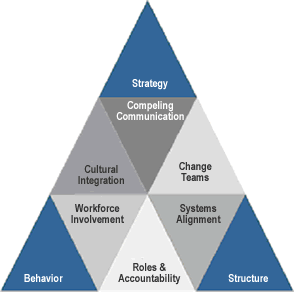
Change Systems
Strategy
Strategy sets a clear direction and focus for the organization and defines how it will achieve its vision and goals. An organization with a strong strategy has people at all levels who can articulate the purpose, mission and business model.
Structure
Processes, procedures and policies are the structural systems that propel organizations and allow them to consistently replicate successful results. For any change effort the impact and dependencies on the current structure must be carefully considered.
Behavior
Behavioral systems include mindset, attitude and motivation - the intangibles of change. Because resistance is a significant cause of failure in change, engaging the hearts and minds of the people is critical to the process. This is where the change becomes real. Change is driven in the behavioral system through the commitment and focus of your people. Structural systems typically get most of the focus during change efforts, therefore it is important that behavior systems align, reinforce and integrate with the strategy and structure or the change will not ultimately succeed.
Change Method
Change Teams
It has been our experience that the probability for success increases when change is implemented through a team-based approach. Change teams involve larger aspects of the organization and engage the knowledge, wisdom and experience of the workforce to accomplish the desired outcome. This approach creates more ownership of the change initiative, and when challenges are encountered, there is a greater resolve and rapid response effort to overcome them.
Roles and Accountabilities
The work environment has become increasingly dependent on the collaboration amongst functions and departments. A natural outcome can be ambiguous around roles and accountabilities. With clarity around roles and accountabilities, change initiatives can stay within scope, be on schedule and succeed. Ultimately one person or group must be accountable for the change effort to make sure it succeeds.
Cultural Integration
Cultural integration is the final piece of our model. Culture change is a long and gradual process and is not likely to be a catalyst in the change process. Values, beliefs and ways of doing business, once entrenched in an organization, take a long time to shift. Effective change agents look for ways to integrate best practices, norms and methods to reduce the impact of the change felt by the workforce. This sends a powerful message to the workforce that, regardless of the change taking place, they are already successful.
Commitment to Change
Compelling Communication
Each organizational system is linked to a key process that drives successful change initiatives. For strategy that key process is compelling communication. Nothing is more important to a foundation for change and ongoing success than a consistent and compelling message. In the absence of information, people will assume the worst case scenario. Communicating and modeling change is a process leaders must master for change to be successful.
Systems Alignment
Systems alignment is a key process that aligns individual efforts with the organizational structure. When systems or structures do not support the change, you risk resistance from individuals and from the organization. When systems are aligned, the change process will be significantly shorter, easier and the results will be more sustainable.
Workforce Involvement
The lack of workforce involvement impedes the progress of change initiatives more than any other single factor. Enlightened Leadership Solutions approach to change management is a process to engage a significant portion of the workforce.
| 