The ELS Integrated Project Team (IPT) Model
Our high performing Integrated Project Teams (IPTs) provide clarity of purpose and strategy, as well as the involvement of the right people. They establish a level of flexibility in an organization that allows it to rapidly adapt to an ever-changing market place. These changes are sustainable and remain relatively transparent to customers and the workforce. The IPT model is built on developing three interrelated levels.
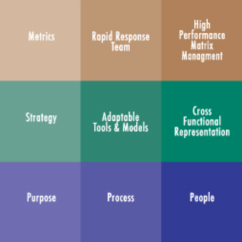
Foundation
Purpose
The cornerstone of a successful IPT is defining a clear and compelling purpose. This step is based on our experience that people, aligned and focused on a common purpose will be committed to instituting the necessary changes and seeing it through, despite any obstacles they encounter.
Process
Central to the theme of building an adaptable and flexible integrated team is understanding how you currently do business. By mapping how information flows, organizations are able to evaluate the effectiveness of current procedures and processes, identify gaps, and develop a new Integrated Project Team Model
or modified process. Processes, when properly developed and formalized, help drive the preferred behavior and sustain the success of the team.
People
The most valuable resource of any organization is its people. The talents, skills and dedication that people bring are the driving force behind organizational performance and results. IPTs focus on coordinating people from all levels of the organization and all key stakeholders in the process. By defining a clear purpose and process, an organization will begin to leverage the talent and commitment of their people, helping to create a truly integrated environment.
Outputs & Outcomes
Metrics
Measurement drives an organization’s focus. Focus the organization on the correct metrics and you will drive the desired behavior. When people help develop what is measured and how it is measured, those metrics become more meaningful and motivating for them.
Rapid Response Teams
The ability to respond quickly and efficiently to customer and project needs is paramount. Our approach answers this need by creating Rapid Response Teams. These teams expand and contract from within the IPT, as multi-disciplinary elements. Their primary role is to develop pre-designed templates that anticipate a variety of potential requests that are outside of the organization’s normal operating parameter. When a request is received, the teams are able to respond with formalized procedures and a known result, rather than reacting and potentially jeopardizing the progress of the team.
High Performance Matrix Management
All organizations strive to operate as high performance teams where motivated employees drive efficiency and productivity. Successful IPTs help make that goal a reality. IPTs are matrices where managers influence and coordinate process, policy and people outside of their direct control. This promotes high performance by establishing a structure and environment where managers leverage flexibility within clearly established boundaries.
Action
Strategy
To take initial action, build the right tools and get the right people involved, it is imperative to establish a sound and comprehensive plan of action. The first step of this plan is to develop a strategy that fits the unique requirements of the project as defined in the purpose. Focusing on the right strategy will dramatically increase the teams’ probability of success.
Adaptable Models & Tools
Establishing the foundation and strategy for developing a highly functioning IPT allows the organization to focus on the unique requirements necessary to achieve those objectives. ELS partners with our clients to develop the right tools and models in response to those objectives. The models and tools developed are designed to be adaptable to a variety of circumstances and environments within the organization, making them an enduring resource.
Cross Functional Representation
One of the greatest single contributors to the successful implementation of IPTs is involving the right people at the appropriate time. Cross functional representation ensures that all the requisite and resident expertise and knowledge are involved, reducing the bias that can occur when departments and teams operate in isolation. Cross functional representation is an essential component to the success of the team and its goals.
